Most people judge a paint job by the color. Painters judge it by the prep. The truth is that the finish you see on the wall, smooth and even with crisp lines, is decided long before the first coat goes on. Good prep is the difference between paint that looks freshly applied for years and paint that peels, cracks, or shows every flaw underneath. Here is how to get your home ready for a painting project, what you can handle yourself, and what our crew at Vivid Coat takes care of when we arrive.
What Homeowners Can Do Before the Crew Arrives
You do not need to be a painter to make the project go faster and smoother. A few hours of preparation on your end means more of the crew's time goes straight into careful painting rather than moving your belongings around.
Clear and move what you can
- Empty the room of small items. Take down photos, mirrors, shelves, and anything mounted to the walls. Pull books, decor, and breakables out of the space entirely.
- Move furniture toward the center. Heavy pieces can stay in the room if they are pulled away from the walls and grouped in the middle. Our crew will cover them, but a few feet of clearance lets us reach every surface.
- Take down window treatments. Curtains, blinds, and rods make masking around windows much cleaner.
- Make a path. Clear hallways and entryways so ladders, drop cloths, and equipment can move without bumping your things.
Point out what we should know
Walk the space and make a quick list of anything that needs attention: a stain on the ceiling, a soft spot on the wall, a door that sticks, a section of trim that has come loose. Telling us upfront means we plan for it instead of discovering it midway. If you are weighing colors, this is also a good moment to settle on them so the schedule stays on track.
What the Pros Handle
This is where the real work of a lasting finish happens. Prep is unglamorous, it takes time, and it is the part most likely to be rushed by anyone trying to cut a corner. We treat it as the foundation of the whole project.
Cleaning the surface
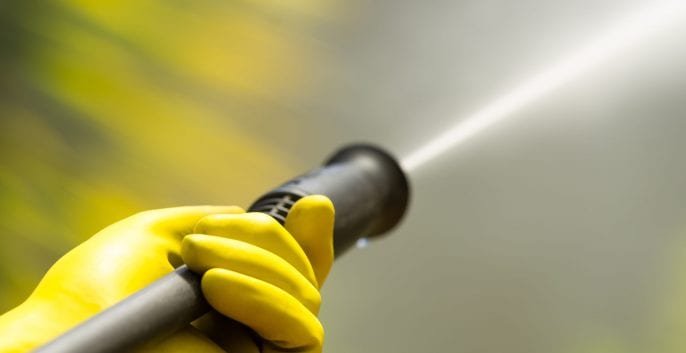
Paint will not bond to dirt, grease, dust, or mildew. Interior walls get wiped down so the new coat has a clean surface to grip. On the outside of a home, that cleaning is a bigger job. South Florida's heat and humidity leave behind mold, mildew, salt, and grime that have to come off before any paint goes on. That is why our power washing step is the foundation of every exterior project. A clean, dry surface is what lets new paint adhere and last instead of flaking off in a season or two.
Patching and repairs
Fresh paint hides nothing. In fact, a smooth new coat tends to highlight every dent, crack, and nail pop underneath it. We fill small holes and dents, then sand them flush. Larger damage, water stains, or anything structural gets a proper fix before painting, which often means drywall repair rather than a quick dab of filler. On the exterior, that includes scraping loose paint, caulking gaps to keep water out, and addressing rot or stucco damage so the surface is sound.
Sanding and priming
Sanding does two things: it smooths out patched areas and it scuffs glossy surfaces so the new paint has something to hold onto. Priming comes next. Primer seals raw patches and bare spots, blocks stains from bleeding through, and gives the topcoat an even base so the color goes on uniform instead of soaking in unevenly. Skipping primer is one of the fastest ways to end up with a blotchy finish.
Masking and protection
Crisp lines are not luck. They are tape, patience, and a steady hand.
Before a brush touches the wall, we mask off trim, ceilings, floors, windows, and fixtures. Drop cloths protect your floors and furniture, and edges that need clean separation get taped carefully. This is the step that produces the sharp lines between wall and trim that make a job look professional rather than rushed.
Why Prep Decides the Finish
A homeowner sees the last coat of paint. Everything that makes that coat look good and stay good happened before it. Clean surfaces let paint bond. Patched and sanded walls give it a smooth canvas. Primer locks it all together and evens the color. Masking gives it clean edges. Skip any of these and the paint may look fine for a few weeks, then start to show the shortcuts. Done right, prep is most of the work and most of the reason the result lasts.
This is true whether we are refreshing rooms inside your home or repainting the outside. Our interior painting and exterior painting projects both start with the same careful preparation, because that is what separates a coat of paint from a finish you are proud of.
If you are planning a painting project in South Miami or anywhere in South Florida, we are happy to walk your home, talk through what prep it needs, and show you what a thorough job looks like. Reach out for a free estimate and we will put together a plan built around your home.