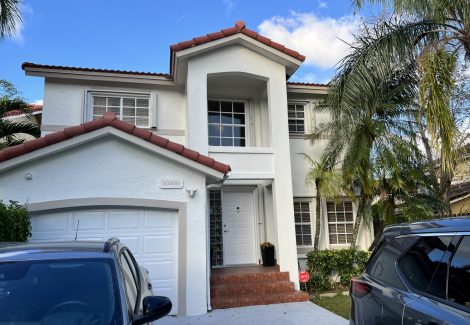
Hurricane season in South Florida runs from June through November, and the same storms that test your roof and windows also test every square foot of your home's exterior paint. Wind driven rain, flying debris, and weeks of saturated air find the weak spots in a coating fast. The good news is that most storm related paint and surface damage is preventable. Here is how to protect your exterior paint and surfaces through hurricane season in South Miami and across South Florida.
Start with a pre-season inspection
Before the heart of the season arrives, walk the outside of your home in daylight and look closely at every surface. You are hunting for the small openings that let water in and the early signs that a coating is failing. Catching these now is far easier than dealing with them after a storm has pushed water inside.
- Cracks in stucco. Hairline cracks are normal, but anything you can fit a fingernail into needs attention before wind driven rain forces water behind the wall.
- Peeling, blistering, or chalking paint. These tell you the coating has lost its grip or is breaking down, which leaves the surface underneath exposed.
- Gaps around windows, doors, and trim. Old or shrunken caulk is one of the most common ways storm water sneaks in.
- Bare or weathered wood. Fascia, soffits, and trim that have lost their paint soak up water quickly during a long storm.
Seal cracks and stucco before the rain comes
Stucco is the most common exterior surface in South Florida, and it is also where most storm related moisture problems begin. A cracked or unsealed stucco wall acts like a sponge when wind drives rain at it for hours, and water that gets behind the surface can lift paint, feed mildew, and rot the framing over time.
Small surface cracks can be sealed and repainted. Larger cracks, spalling, or soft spots point to a deeper issue that should be fixed before any coating goes back on. If your walls show real damage, address it with proper stucco repair first, because paint over a failing surface will not hold and will only hide the problem until the next storm.
Caulking is your first line of defense
Caulk is cheap, but the protection it provides is hard to overstate. Every seam where two materials meet is a potential entry point for water, and those seams open up over time as the house expands and contracts in the heat. Before the season, check and refresh the caulk around windows, doors, trim boards, and any penetration through the wall, such as vents and hose bibs.
Most storm water damage we see did not come through a dramatic failure. It came through a quiet gap in old caulk that nobody noticed until the ceiling stained.
Use a quality exterior caulk rated for the joint you are sealing, and remove the old, cracked material rather than smearing new caulk on top of it. Good caulk only works when it bonds to a clean surface.
When to paint relative to storm season
Timing matters more in our climate than in most. Paint needs a dry surface and a window of dry weather to cure properly, and both are harder to find once the afternoon storms settle in for the summer. The ideal time for major exterior work is the drier part of the year, roughly late fall through spring, when you can count on stretches of low humidity and clear days.
That does not mean nothing can be done in summer. Smaller repairs, spot sealing, and caulking can usually be handled between storms. But if your home needs a full repaint, planning it for the dry season gives the coating the best chance to cure fully before the next round of hurricanes. Our exterior painting team can help you plan the timing around the forecast.
After the storm: inspect, repair, repaint
Once a storm has passed and it is safe to be outside, give your exterior another close look. Some damage is obvious, but moisture intrusion often hides until it has had time to spread.
- Check for new cracks and impact marks. Debris can chip paint and crack stucco, opening fresh paths for water.
- Look for bubbling or soft paint. This means water got behind the coating and the surface needs to dry before any repainting.
- Watch for interior stains. A water mark on a ceiling often points back to a failure on the outside that needs sealing.
Resist the urge to repaint a wet wall right away. Trapped moisture is the number one cause of paint that peels again within a season. The surface needs to dry, the underlying damage needs to be repaired, and only then should the new coating go on. For wind, water, and impact damage that goes beyond paint, our hurricane and storm damage service can help get your exterior back in shape the right way.
Protect your home before the next storm
Hurricane season is predictable, even if the storms themselves are not. A sound exterior, sealed cracks, fresh caulk, and a coating in good condition give your home a real edge when the weather turns. As a locally owned painting company serving South Miami and South Florida, Vivid Coat knows what our storms do to a home and how to prepare for them. If you want your exterior inspected and protected before the next storm, or repaired and repainted after one, contact us for a free estimate and we will walk your home with you and recommend the right plan.